Fuel in Latvia is well past 2 €/litre. Every litre your car burns for nothing – that's your money going up in smoke. The real problem? Most drivers waste 10–25% of their fuel without even realizing it. We put together a no-nonsense list: what to check, what to fix, and what to optimize so you can finally stop feeding gas stations.
Part 1. Free Fixes That Actually Work
Let's start with things that cost you absolutely nothing but save real litres.
Every 0.3 bar below the recommended level = +1% fuel consumption. Four underinflated tires – that's 3–5% of your engine's efficiency gone. It works harder, burns more, and you don't even feel the difference behind the wheel. Check once a month on cold tires. Free, but it works.
FreeEvery 50 kg of extra weight = +2% fuel consumption. Winter tires sitting in the boot all summer, a toolbox "just in case," random stuff you keep meaning to take out – sound familiar? A roof rack you're not using also counts: +10–15% aerodynamic drag on the motorway.
FreeAggressive acceleration + hard braking = +15–30% fuel consumption in the city. This isn't a myth – it's physics. Smooth acceleration, anticipating traffic flow, and cruising at a steady speed – that's the difference between 7 and 9 litres per 100 km. Cruise control on the highway alone drops consumption by 5–8%.
FreeModern engines are designed to warm up while driving. At idle, the engine guzzles fuel with zero useful output. 5 minutes of warming up in winter = ~0.5 L wasted. Start the engine – wait 30–60 seconds – drive gently. Your engine actually prefers it that way.
FreePart 2. Maintenance That Pays for Itself
These cost money upfront, but they pay for themselves through fuel savings within a couple of months.
A clogged filter restricts airflow – the ECU enriches the fuel mixture to compensate. Result: +5–10% fuel consumption, reduced power, sluggish acceleration. A new filter costs 15–30 €. It pays for itself in a week.
15–30 €Sticking brake pads are a hidden fuel killer. Caliper pistons don't fully retract, pads drag against the disc constantly. Your engine fights the brakes: +5–15% fuel consumption. Symptoms: hot discs after driving, squealing, the car feels like it won't coast. A check is free at any service centre.
Up to +15% consumptionOn diesel engines, this is one of the biggest reasons for excessive fuel consumption. A clogged DPF increases exhaust backpressure – the engine "suffocates," and the ECU increases injection for forced regeneration. The result: +8–15% fuel consumption, weak acceleration, and constant warning lights on the dashboard. Professional cleaning without removal eliminates up to 98% of deposits and restores the engine's ability to breathe properly.
Impact: up to −15% consumptionFaulty lambda sensors, air leaks, worn injectors – the ECU can't maintain the optimal air-to-fuel ratio. Consumption climbs by 10–20%, but there may be no warning lights – the system adapts to incorrect data, and you end up thinking "well, I guess this engine just drinks that much." It doesn't. A proper diagnostic will reveal the truth.
Up to +20% consumptionPart 3. What Car Manufacturers Won't Tell You
The four tips above? Most people know them. But here's where we enter territory that 90% of car owners have never even considered – and where they're silently bleeding money.
Factory firmware is a compromise across dozens of markets, tax brackets, and marketing segments. The same engine gets sold in 3–5 power variants – the only difference is software. The result: your engine is artificially restricted, consuming more fuel than it needs to, and running below its optimal range.
A proper ECU calibration (eco-tuning) adjusts injection maps, boost pressure, and ignition timing. The engine runs more efficiently – fuel consumption drops by 8–15% during normal driving. This isn't marketing hype – it's physics: optimized maps = less fuel for the same amount of work.
Impact: −8–15% consumptionBut won't this damage the engine?
No – if it's done right. A proper calibration doesn't increase stress on the engine; it makes the engine run in a more balanced way. The key word is "proper." Flashing a random file from the internet onto a tired engine without diagnostics – that's a recipe for disaster. The right approach: diagnostics first → fix hidden issues → then calibrate → verify on a DYNO bench.

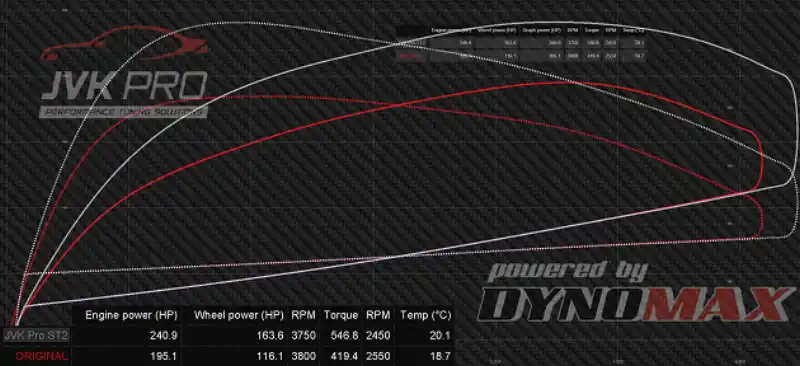
A botched remap from a garage "tuner" – overfuelling, crude boost maps, disabled sensors. Instead of savings, consumption spikes by 10–25%, and the engine runs under constant stress. The worst part: no warning lights on the dash, so the owner just assumes "well, I guess the engine is getting old." It's not. Getting the current calibration audited and properly redone – that's what actually changes things.
Up to +25% consumptionHere's the thing: problems stack up. Sticking brake pads (+7%) + underinflated tires (+3%) + clogged DPF (+10%) + suboptimal firmware (+8%) = +28% fuel consumption. You're burning 10 litres instead of 7.8. Over 15,000 km a year, that's 330 extra litres – €716 thrown away.
A comprehensive diagnostic is the only way to find every source of excess consumption in one go. Not a "had a quick look, seems fine" – a full audit: mechanical, electronic, sensors, current calibration, DPF condition, and a DYNO bench power measurement.
Best ROIAfter 5 years of use, any car loses up to 20% of its power. Carbon buildup in the intake manifold, worn injectors, a clogged intercooler – the engine "suffocates" and burns extra fuel to compensate for the losses. A thorough cleaning + bench calibration brings the engine back to factory specs and beyond.
Impact: up to −4 L/100 km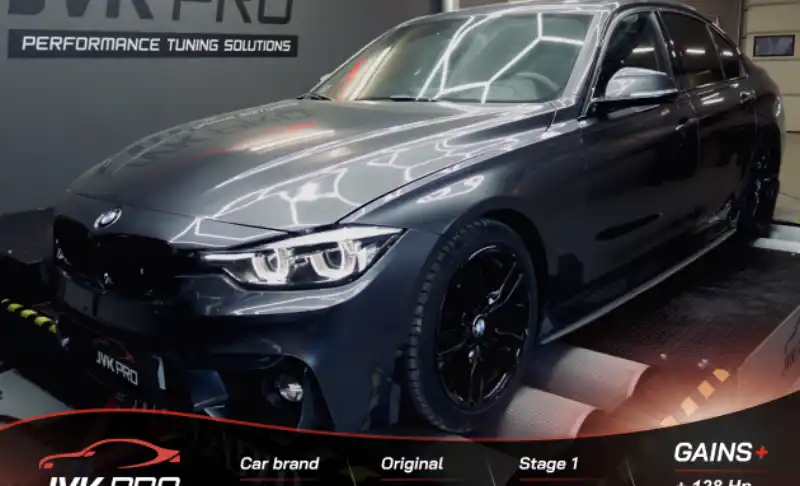
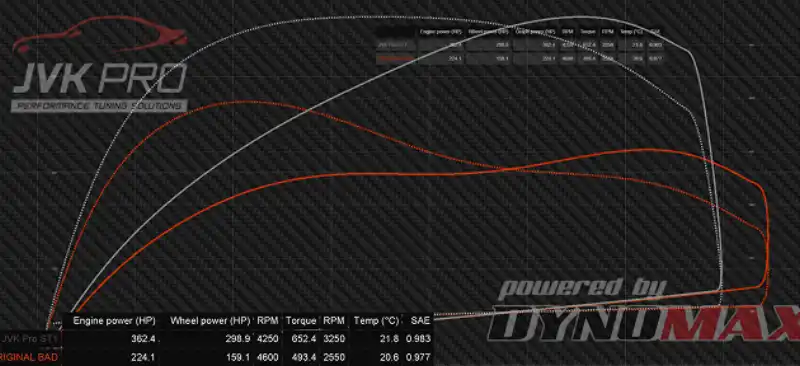
This BMW 335D measured just 224 HP on the bench instead of the factory 313 – a loss of 89 horsepower, and consumption had ballooned to 14 L/100 km. The intake manifold was choked with carbon deposits – the engine literally couldn't breathe. After inspection, cleaning, replacing intake hoses, and a full bench calibration: 362 HP and 10 L/100 km. The owner couldn't believe it.
How Much Can You Save in a Year
Let's say you found and fixed even some of these issues. Here's the simple maths:
And that's with a modest −1.5 L/100 km improvement. In real-world cases with full diagnostics + cleaning + calibration, we see reductions of 2–4 litres. That's already €650–1,300 per year.
What to Look for When Choosing a Service
If you've read tips 9–12 and you're thinking about tuning – here's a quick checklist so you don't end up at a "workshop" that makes things worse:
- DYNO bench. Without it, tuning is guesswork. You need real power numbers before and after – not "yeah, it feels faster."
- Diagnostics before tuning. If they jump straight to "let's flash it" with no checks – run. Flashing a worn-out engine = money down the drain.
- Soot particle measurement. Mandatory across Europe since 2025. Without it, your MOT becomes a lottery.
- Professional equipment. Magicmotorsport FLEX, Alientech, AUTOTUNER – that's professional grade. Free software from AliExpress – not so much.
- Firmware warranty. 12 months minimum. If they won't give one – they're not confident in their own work.
- Reviews and real results. Actual DYNO charts from real cars – not pretty tables copied from the internet.
Stop Feeding Gas Stations
Book a comprehensive diagnostic. We'll find every source of excess consumption and show you exactly how much you'll save.
Book Now