
Ford Explorer Stage 1
6 engines – 210–457 hp
6
engines
+56 hp
Max gain
+11%
Avg. gain
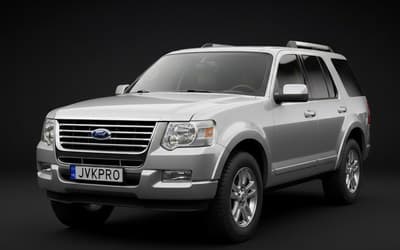
2006 - 2010
2 engines
| Engine | Fuel | Stock (hp) | Stage 1 (hp) | Gain |
|---|---|---|---|---|
| 4.0 V8 210hp | Petrol | 210 | 233 | +23 (11%) |
| 4.6 V8 292hp | Petrol | 292 | 313 | +21 (7%) |

2011 - 2018
3 engines
| Engine | Fuel | Stock (hp) | Stage 1 (hp) | Gain |
|---|---|---|---|---|
| 2.3 Ecoboost 280hp | Petrol | 280 | 336 | +56 (20%) |
| 3.5T V6 Ecoboost 370hp | Petrol | 370 | 402 | +32 (9%) |
| 2.0T Ecoboost 240hp | Petrol | 240 | 271 | +31 (13%) |
2019 ->
1 engines
| Engine | Fuel | Stock (hp) | Stage 1 (hp) | Gain |
|---|---|---|---|---|
| 3.0 Ecoboost V6 457hp | Petrol PHEV | 457 | 477 | +20 (4%) |
FAQ
Is Stage 1 safe for the engine?+
Yes, Stage 1 is a mild optimization within factory safety margins. We use dealer-level equipment and verify results on a dyno.
How long does it take?+
Usually 2–4 hours, including diagnostics, remapping, and a control measurement on our dynamometer.
Does it affect fuel consumption?+
Stage 1 can reduce consumption (better torque curve) or slightly increase it under aggressive driving. On average, consumption stays the same.